

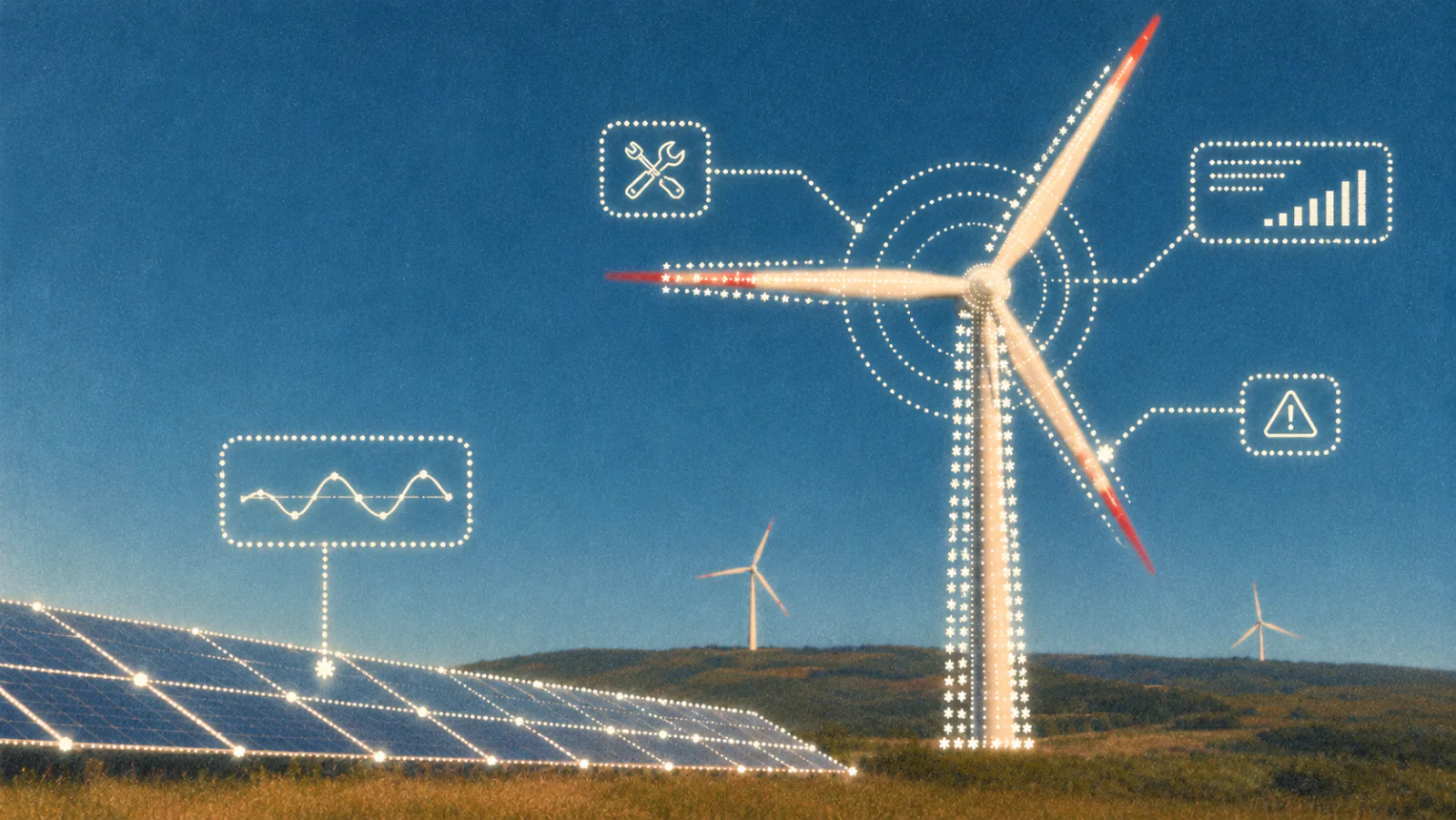
Five trends are shaping renewable energy asset management in 2026: data-driven decisions at portfolio scale, AI and automation in daily operations, mixed solar, wind and storage portfolios, cybersecurity and NERC compliance as core obligations, and a shift to performance-linked contracts. Each pushes owners toward platforms that connect operational data to financial outcomes.
Why asset management is now the competitive edge
As the world races toward net-zero, renewable energy asset management has become central for utilities, independent power producers (IPPs) and clean energy investors. The question is no longer only how much capacity gets built, but how profitably and predictably it runs.
The scale is large. IRENA reports that the world added 692 GW of renewable capacity in 2025, lifting the total to 5,149 GW. Solar accounted for 511 GW of those additions and wind for 159 GW. Precedence Research estimates the renewable energy asset management market at USD 11.18 billion in 2025, growing to USD 35.07 billion by 2034 (13.54% CAGR). Other research firms publish different figures, so treat any single forecast as directional.
Five trends in renewable energy asset management
1. Data-driven decision making at scale
Portfolios are growing, and so is the data they generate. Owners are moving beyond basic monitoring to analytics, AI and digital twins for better decisions.
- Predictive analytics helps managers spot performance degradation early, prioritize maintenance and optimize dispatch.
- Portfolio dashboards compare assets side by side, so teams flag underperformers and focus resources where they matter.
- Historical data cleansing and model training are now must-haves. Teams that invest here see higher returns and less downtime.
2. AI and automation in daily operations
AI-powered asset management platforms are changing daily work. Automated work order creation, fault code triage and intelligent forecasting are becoming standard.
- Automation reduces manual reporting, freeing engineers for improvement work instead of spreadsheet upkeep.
- AI assistants surface exact repair steps from OEM manuals, shortening troubleshooting and avoiding unnecessary truck rolls.
- Intelligent forecasting supports energy market participation and helps reduce imbalance penalties.
For a closer look at how, read Smart Energy Management: How AI Is Changing the Game.
3. Portfolio diversification and complexity
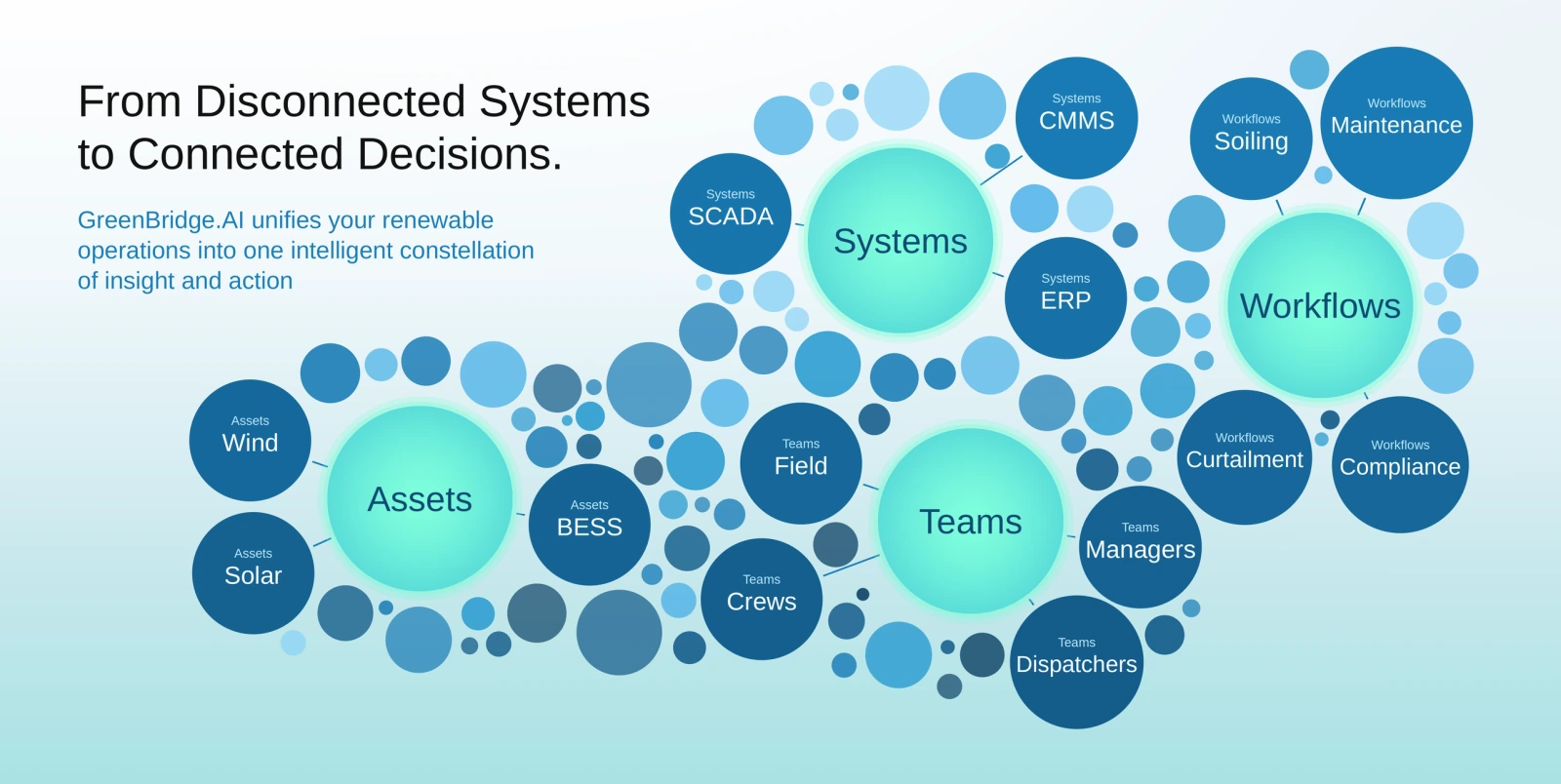
Utilities and owners increasingly run mixed portfolios of solar, wind, BESS and hybrid sites. That raises the difficulty of balancing performance, forecasting and revenue.
- Multi-asset management systems give portfolio-wide visibility and control across technologies.
- Cross-technology benchmarking shows where performance gaps sit and sets consistent KPIs across assets.
4. Cybersecurity and NERC compliance become core obligations
As plants become more digital and connected, cybersecurity and regulatory compliance affect operational continuity and investor confidence. Two 2026 changes matter in North America:
- NERC Category 2 registration. From May 15, 2026, owners and operators of non-BES inverter-based resources of at least 20 MVA aggregate capacity connected at 60 kV or higher must register as Generator Owners or Operators. Many solar, wind and storage sites that sat outside direct NERC oversight are now in scope. Which standards apply to Category 2 resources is still being worked out, so check current NERC guidance for your sites.
- CIP-003-9 for low-impact assets. The standard took effect on April 1, 2026 and pushes vendor remote access toward formal, evidence-based controls for inverter controls, plant controllers and SCADA systems.
Many operators also align IT and operational-technology security programs with frameworks such as ISO 27001, and use AI-driven monitoring to flag unusual data patterns before they disrupt generation.
5. Performance-linked revenue models
The industry is shifting from fixed O&M contracts to performance-based agreements that align incentives between asset owners and service providers.
- Accurate, transparent performance reporting is now essential to validate payouts and keep contracts trustworthy.
- Platforms that extract contract terms and automate compliance checks are becoming key tools for asset managers, which is what Revenue Assurance is built to do.
What to do about each trend
| Trend | Action to take now |
|---|---|
| Data-driven decisions | Clean and structure historical SCADA, maintenance and fault data before adding models. |
| AI and automation | Pilot automated work orders and fault triage on a defined set of assets and baseline MTTR first. |
| Mixed portfolios | Set one KPI framework across solar, wind and storage so assets can be compared. |
| Cybersecurity and compliance | Confirm NERC registration status for each site and review vendor remote access controls. |
| Performance-linked contracts | Digitize contract terms so payouts and obligations can be checked against operating data. |
The financial case
Published estimates for predictive maintenance are best read as ranges with a named baseline. The U.S. Department of Energy’s O&M guide (2010, across industries) estimates savings of 8–12% over a preventive program and 30–40% against purely reactive maintenance. Deloitte estimates 5–10% lower maintenance costs and 10–20% higher uptime. Results for a given portfolio depend on its starting point and data quality, and they compound over a 25–30 year asset life.
Regional picture
Europe led the asset management market with about 30% of revenue in 2024, according to Precedence Research, and Asia Pacific is expected to grow fastest. IRENA’s data shows the same pull: Asia added 74.2% of new renewable capacity in 2025, while Europe holds 934 GW of installed renewable capacity.
Frequently asked questions
- What is renewable energy asset management?
- It is the practice of monitoring, maintaining and optimizing solar, wind and storage assets to maximize availability, output and financial return across their lifetime.
- What is an example of an energy management system?
- A platform that connects monitoring, maintenance and reporting across solar, wind and storage assets, prioritizes work and coordinates how the portfolio participates in energy markets.
- Which trend should owners act on first?
- Compliance and data quality. Registration obligations have fixed dates, and clean, structured data is the base for every other trend.
Conclusion
The trends point in one direction. AI automation, mixed portfolios, tighter compliance and performance-based contracts all reward owners who connect operating data to financial outcomes. Teams that modernize their asset management now will be better placed as the energy transition accelerates.
Ready to modernize your renewable energy asset management strategy? Start the conversation.
Sources
- IRENA, Renewable Capacity Statistics 2026 (April 2026): 692 GW added in 2025, total 5,149 GW; solar 511 GW and wind 159 GW added. Coverage: pv-tech, SolarQuarter (Asia 74.2% of additions; Europe 934 GW).
- Precedence Research, Renewable Energy Asset Management Market: precedenceresearch.com (USD 11.18 billion in 2025 to USD 35.07 billion by 2034; Europe about 30% share in 2024).
- pv magazine USA, NERC Category 2 registration deadline: pv-magazine-usa.com.
- pv magazine USA, NERC CIP-003-9 for low-impact assets: pv-magazine-usa.com.
- U.S. Department of Energy, Operations & Maintenance Best Practices Guide, Release 3.0 (2010): energy.gov/femp.
- Deloitte, Predictive Maintenance and the Smart Factory: deloitte.com.